
Transcript
Announcer Introduction:
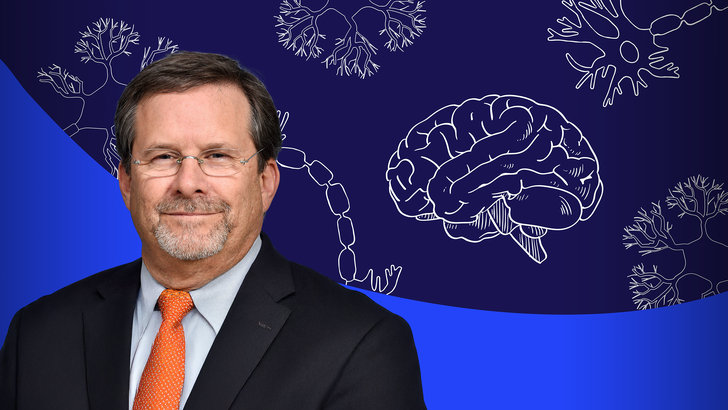
Welcome to NeuroFrontiers on ReachMD. On this episode, we’ll hear from Dr. Marc Haut, who’s the Director of the Rockefeller Neuroscience Institute’s Memory Health Clinic at West Virginia University in Morgantown. He’ll be discussing current and emerging technologies that can help us diagnose Alzheimer’s disease. Here’s Dr. Haut now.
Dr. Haut:
So there’s been a lot of progress made in diagnosing Alzheimer’s disease. It started about 20 years ago when the University of Pittsburgh developed a PET tracer compound that allowed you to see the buildup of amyloid plaque in people while they were alive. Before that, you could only determine if there was plaque by looking at somebody at autopsy, and because of that, until that point, diagnosis was by exclusion. We looked for signs and symptoms, but we didn’t have proof of pathology, and that’s really important because a lot of studies that were done probably had a lot of patients in there who truly didn’t have Alzheimer’s.
Now, since that initial study, there have been a number of tracers that have been developed that are FDA approved and actually reimbursed by Medicare to determine, using PET scans, if there is amyloid plaque in somebody’s brain. That’s an amazing breakthrough. Also, we now have the ability to determine if there’s amyloid in the cerebral spinal fluid as well as the second bad protein besides amyloid plaque associated with Alzheimer’s, which is tau. We can measure that in the spinal fluid also.
I’ll tell you from a practical standpoint that most people want to have a PET scan rather than a spinal tap. But right now, clinically, we don’t have the ability to do tau PET scans. That will come in the future. We can do them with research, but right now, we can just measure the amyloid.
Now, not every place has a PET scan, and not every place can get the tracer even though they’re reimbursed, so the next frontier is plasma screening a blood draw to see if you could pick up the molecules that say you have Alzheimer’s, amyloid, and tau. And so there was a measure from the plasma called p-tau 217. So this will be a really good and is a good screener to see if you should have a more in-depth workup.
So if you look back over the last 20, 25 years, we’ve gone from clinical sense and ruling everything out and hoping we get the diagnosis right to knowing for certain what the pathology is or isn’t in the case. And it’s great news that we can give people when we tell them they don’t have amyloid plaque. Sometimes, we do so many scans that we don’t have enough well-qualified radiologists to read them, and they get backed up doing that. So using imaging and using artificial intelligence with imaging will happen in the near future, I believe. It’s most likely to start as a screener or an indication, and those cases that are flagged, we’ll look at more in-depth or have a radiologist look at.
Now, the most exciting thing that artificial intelligence, I think, can do in the future is synthesize large amounts of information and data. So we’re going to have clinical history; we’re going to have genetics; we’re going to have MRI scans; we’re going to have cognitive measures; and we’re going to have PET scans. And the ability to look at and understand multiple patterns with multiple different pieces of information is a little more complex than what most humans can handle, so that ability not to just look at imaging but to synthesize all the information and data and point you in the right direction or confirm a thought that will happen in the near future too.
Announcer Close:
That was Dr. Marc Haut talking about how new technologies can play a role in Alzheimer’s diagnosis. To access this and other episodes in our series, visit NeuroFrontiers on ReachMD.com, where you can Be Part of the Knowledge. Thanks for listening!
